Food safety and commercial cleaning experts in Brampton support your business in maintaining restaurants, food supply centers, bakeries, warehouses, and food service units to code. They sanitize frequently touched areas, food preparation zones, equipment, floors, drains, restrooms, and prep areas with approved chemicals, proper dilution, and recorded contact times.
Essential Summary
- Brampton food safety cleaning experts service restaurants, grocery departments, commissaries, warehouses, bakeries, schools, mobile vendors, and allergen-sensitive operations.
- Frequently contacted areas, food-contact equipment, kitchens, floors, drains, restrooms, and storage areas are cleaned using area-specific procedures to eliminate cross-contamination.
- Qualified providers validate proper chemical concentration, appropriateness, and exposure duration, then record finishing with samples, reviews, and corrective-action records.
- Sound cleaning timelines account for risk, production rate, format changes, accidents, and regulations when allocating daily, periodic, and seasonal duties by area.
- Highlight providers showing HACCP, public-health knowledge, WHMIS preparation, liability, endorsements, color-categorized equipment, and inspection-ready sanitation files.
Food Safety Cleaning Requirements for Brampton Establishments
Brampton venues that process, store, prepare, package, or distribute food require hygiene cleaning. Implement it if your facility is regulated by public health inspection, food premises regulations, or internal HACCP-based controls. The mandate covers eateries, dining facilities, warehouses, supermarket areas, meat counters, fish departments, retail outlets, and institutional kitchens.
Adherent sanitation standards proves necessary in storage facilities, production centers, refrigerated warehouses, bakeries, school nutrition services, event spaces, and delivery hubs. Portable temporary ventures count too, like catering trucks, festival vendors, and pop-up food booths. Your facility needs recorded sanitation procedures whenever your team handle raw materials, divide prepared dishes, warm meals, or keep allergens stored. In Brampton, food safety stays voluntary; it represents statutory, functional, and public health adherence.
What Do Brampton Cleaning Experts Clean?
Professional cleaning services specializing in Brampton disinfect high-contact surfaces, food preparation areas, ground surfaces, and restrooms in compliance with food safety regulations. Focus on these locations occurs because they pose maximum contamination danger, potential for accidents, and possible regulatory violations.
Understanding their cleaning procedures allows you to confirm your facility's cleaning meets operational demands and regulatory compliance.
High-Touch Surface Cleaning
develop a sterilization protocol
changing cloths consistently, following unidirectional workflows, and organizing disinfection materials by area. This approach keeps your sanitation plan quantifiable, defensible, and inspection-ready always.
Cooking Zones, Walking Surfaces, and Restroom Environments
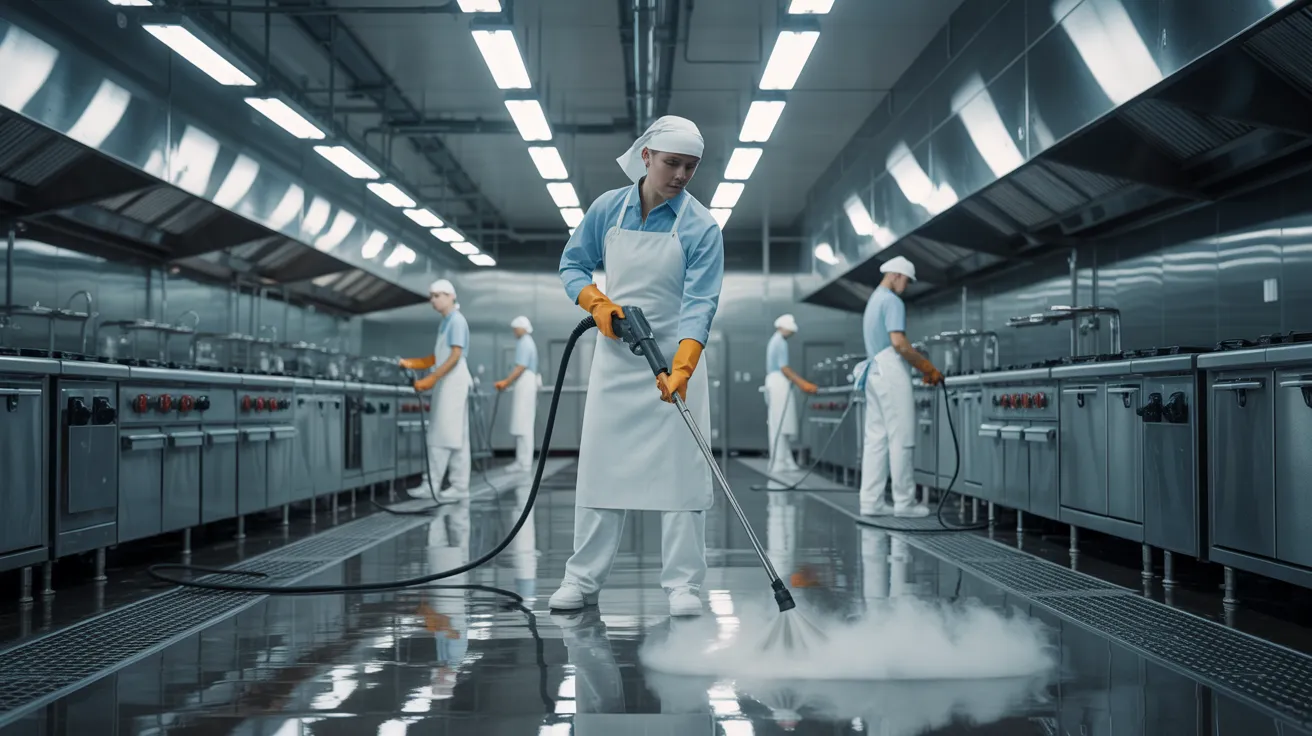
Brampton cleaning professionals will handle kitchens, floors, and restrooms since each space presents different hygiene concerns, injury, and public health challenges. In industrial kitchens, you need degreasing on cook lines, equipment exteriors, drains, prep surfaces, and splash zones to minimize bacterial growth and pest activity.
Professional floor care with documentation is also included. is also provided as part of the service.
For restroom sanitation, cleaners disinfect high-touch surfaces, bathroom fixtures, stall dividers, supply dispensers, and trash receptacles, then refill items and eliminate smells. They also maintain restaurant cleaning supply rooms where product storage, sink cleanliness, and drain systems impact daily sanitation standards and worker protection.
Why Food Safety Cleaning Matters in Brampton
In Brampton, you must copyright food-safe cleaning standards to meet regulatory standards and achieve compliance. You also reduce bacterial spread through proper cleaning of food-preparation surfaces, appliances, and frequently-touched items. Most importantly, you help professional advice protect community wellness by reducing the chance of food poisoning in your establishment.
Health Code Compliance
Because Brampton food companies operate under mandatory safety protocols, food safety cleaning directly affects your competence to adhere to health code requirements, protect customers, and eliminate enforcement action. You must maintain hygienic food handling zones, verifiable cleaning logs, appropriate product handling, and verifiable staff procedures that align with municipal and provincial inspection expectations.
Failure to maintain cleaning standards leads to violations, remedial directives, public perception damage, and temporary closure during further inspections or enforcement reviews.
Cross-Contamination Control
Maintaining regulatory compliance copyrights on your capacity to prevent cross-contamination during daily food handling and cleaning. You must separate raw ingredients from ready-to-eat foods, sterilize work zones between assignments, and position cleaning agents away from food surfaces. Clear procedures reduce transfer risks and support consistent compliance during inspections.
You should establish allergen separation to prevent major allergens from touching shared surfaces, containers, or equipment. Use dedicated cutting boards, color-coded tools, and careful equipment identification so staff don't mix items throughout cooking or serving. Require handwashing after handling raw meat, seafood, eggs, or allergen-containing products. Replace wiping cloths regularly, and verify sanitizer strength with test strips. When staff members receive training on these procedures each work period, you create a cleaner, safer operation that satisfies Brampton's safety standards consistently.
Public Health Protection
When food safety cleaning weaken, you don't only face inspection setbacks—you expand the chance of food contamination affecting customers, staff, and the larger Brampton community. You also undermine your responsibility in protecting public health, especially in busy food facilities where contamination can spread quickly through surfaces, equipment, and touchpoints.
You require sanitation protocols that remove contaminants, disinfect correctly, and confirm effectiveness. This involves adhering to contact periods, utilizing approved disinfectants, documenting procedures, and instructing staff to satisfy regulatory standards. These controls promote pathogen reduction by decreasing microbes before contaminating food or surfaces. Across Brampton, strong cleaning protects at-risk populations, reduces disease potential, and demonstrates accountability. When you maintain proper protocols, you go beyond requirements—you substantially lower hazards and enable safer food service city-wide.
In What Ways Does Cleaning Help Achieve Food Safety Compliance?
Following rigorous cleaning routines enhances food safety compliance by decreasing contamination threats, preventing pathogen multiplication, and positioning your facility in accordance with sanitation requirements under HACCP-based programs and public health regulations. You validate that product-contact areas stay visibly clean and microbiologically controlled, backing documented preventive controls and inspection readiness.
Cleaning strategies additionally amplify allergen control by eliminating residues that can lead to undeclared allergen exposure.
When Should You Plan Commercial Cleaning?
maximum production periods, product changeovers, spill events
facility shutdowns, weather-related soil accumulation, or pest management times
Finding Quality Brampton Cleaning Experts: A Guide
Screen providers initially by their food hygiene standards—not budget alone. You need to confirm that every company meets CFIA, public health, and HACCP-aligned expectations for your operation. Demand insurance verification, WHMIS compliance, training records, and management systems. Evaluate technician understanding of cross-contamination risks, chemical safety, and documented sanitation practices.
Additionally, you need to evaluate operational reliability and responsibility. Obtain references from food facilities in Brampton, then review service speed, corrective-action procedures, and communication standards. Verify the company conducts supplier reviews and can deliver inspection-ready documentation when inspectors or external parties need proof. Verify equipment upkeep, colour-coded tools are applied correctly, and location-specific dangers are identified. A capable service protects compliance, product quality, and your brand reputation.
What's included in a sanitation cleaning strategy?
Put together a written plan that establishes every sanitation task, standard, and responsibility before production begins. You should specify cleaning intervals, permitted substances, dilution percentages, exposure times, instruments, and inspection methods for each zone, surface, and piece of equipment. Add pre-operational inspections, corrective actions, and employee training requirements.
Your strategy should also address cross-contamination controls, waste handling, pest-prevention measures, and documented schedules for rest areas, drains, flooring, and food-contact surfaces. Detail how you'll keep raw and ready-to-eat processes separate, support ingredient tracking, and ensure accurate allergen labeling through validated cleaning between product changes. You should assign accountability, maintain signed records, and assess results against regulatory standards, HACCP controls, and customer requirements. When gaps appear, modify procedures immediately and instruct staff.
Commonly Requested Inquiries
Will cleaning services handle overnight shifts at Brampton properties?
If you operate controlled facilities, you'll also need documentation that support inspections and maintain compliance.
Can sanitation professionals handle emergency spill response?
Yes, you can expect many Brampton cleaning experts to provide hazard containment services. They manage hazardous materials, assess risks, contain contamination, and begin swift cleanup to minimize risk and operational disruption. You should verify arrival timeframes, professional credentials, PPE protocols, and waste management. If your facility must meet health or food safety regulations, choose a provider that documents incidents, follows compliant sanitation standards, and supports audit readiness.
Can plant-based disinfectants be applied securely on surfaces contacting food?
Absolutely, green disinfectants are secure for food-handling equipment when you opt for disinfectants approved for food contact and meeting regulatory standards. You must verify application timing, concentration levels, and rinse protocols in advance of use. Plant-derived products reduce chemical hazards, though you still need demonstration of efficacy against relevant pathogens. For maintaining residue free surfaces, adhere to exact manufacturer guidelines and validate the sanitizer complies with food sanitation requirements.
Can cleaning schedules flex with seasonal shifts?
Yes, you can customize sanitation programs for seasonal production changes. You should modify intervals, staffing, chemicals, and verification steps to fit operational cycles while sustaining regulatory requirements. You'll lower production downtime by scheduling disinfection around line changes, high demand periods, and usage cycles. You should additionally revise standard operating procedures, employee training, and facility monitoring to reflect periodic risks, novel allergens, or increased soil loads. Periodic assessments preserve your strategy current.
Do commercial cleaners train employees on hygiene standards?
Absolutely, professional cleaning companies frequently provide staff training on sanitation best practices. Your staff gets instruction on correct chemical handling, dwell times, cross-contamination prevention, equipment disassembly, and paperwork. They generally match guidance with HACCP, GMP, and CFIA or local public health requirements. Many conduct health inspections to ensure adherence, identify gaps, and strengthen corrective measures. This helps you maintain consistent procedures, pass inspections, and lower contamination dangers consistently.
Summary
When you work with Brampton food safety and commercial cleaning specialists, you don't just tidy up—you keep your operation inspection-ready and your protocols compliant. From kitchens to processing floors, every polished surface and well-kept corner minimizes unwelcome guests and avoid expensive problems. By arranging cleanings at the proper frequency and following a clear cleaning plan, you protect employees, patrons, and your reputation. In a tightly regulated environment, clean spaces aren't optional—they're fundamental to proper operations.